Posts mit dem Label John McDonald werden angezeigt. Alle Posts anzeigen

2026-04-06

haiku


an chéad uair dó
snáthaid mhór a bhlaiseadh - 
 gealbhan óg


its first taste 
of dragon-fly - 
young sparrow

雛すずめ 
初めて に 
トンボ

its furst pree 
o a deil's darnin needle - 
youthie speuggie


Irish & English: Gabriel Rosenstock
Japanese: Mariko Sumikura
Scots: John McDonald

2026-04-05

Bashō


faoi cheilt, anaithnid
ar nós na gealaí úire
a bheadsa feasta

dernt an unkent
lik the new muin
ah'll live ma life

(Béarla na hAlban: John McDonald)

κρυφός κι αφανής 
σαν τη νέα σελήνη 
έτσι θα ζήσω 

(Gréigis: Sarah Thilykou)
 

2025-05-18

Markéta Luskačová


Ginger ab ainm dó
ceoltóir sráide
thuig sé conas slua a tharraingt

his name was Ginger
a street musician
he knew how to draw a crowd

he wis cried Ginger
a causey busker -
he cud pou a crood

Béarla na hAlban John McDonald 

2025-05-16

Markéta Luskačová


lasmuigh d'Eaglais Chríost . . .
a Chríost, an gcloiseann tú
uaigneas an orgáin bhéil?


outside Christ Church . . .
Christ, can you hear
the mouth organ's melancholy strain?

    ootby Christ Church...
    Christ, can ye hearken
    tae the moothie's dowie souch?

 (Leagan Béarla na hAlban: John McDonald)

2025-05-14

An talamh naofa


The Holy Land, a 'found poem' in English with an Irish translation by 'finder' Gabriel Rosenstock.
Scots version: John McDonald.
From Mark Twain's travelogue The Innocents Abroad (1869)

The Holy Land


 . . .The relic that touched us most 
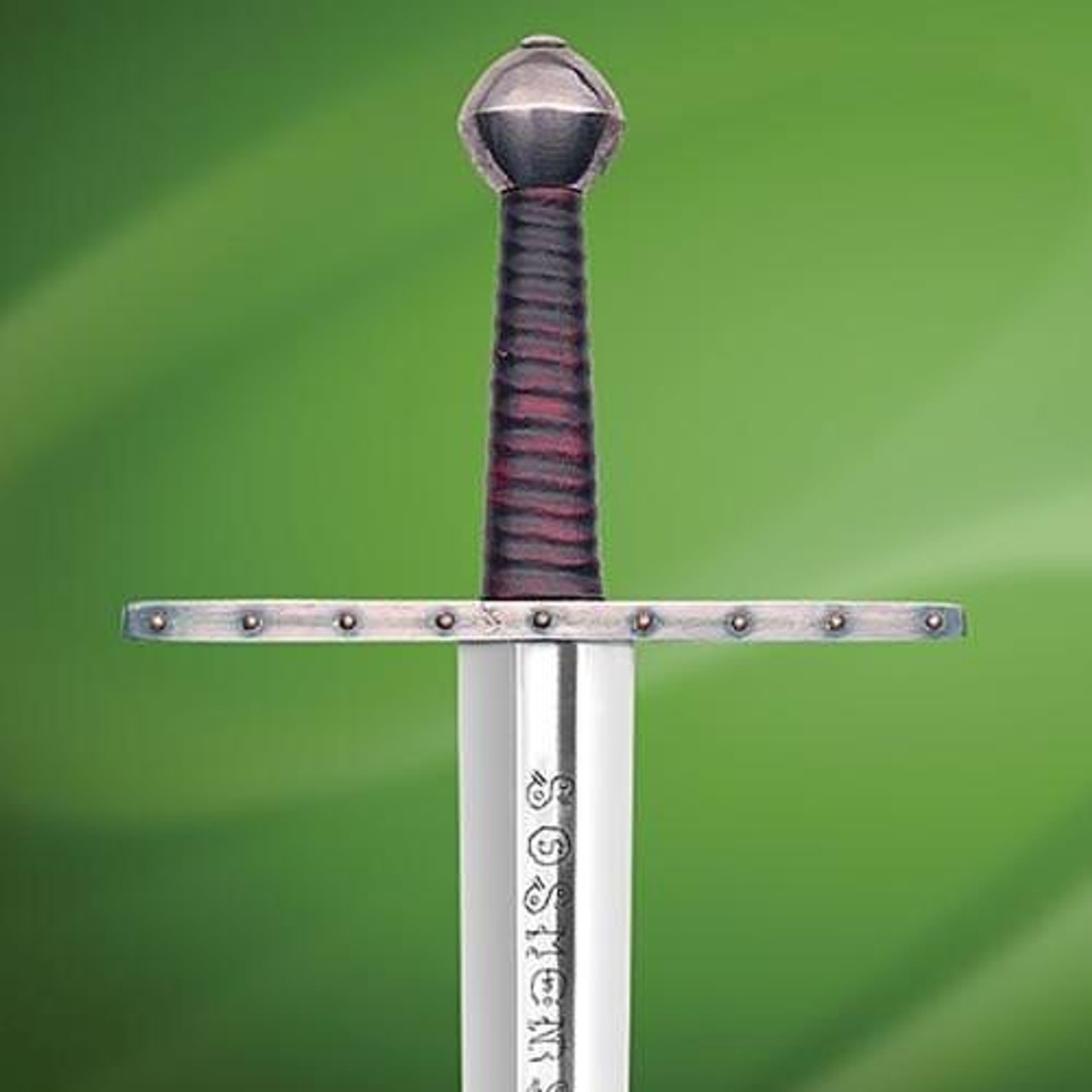
was the plain old sword of that stout Crusader, 
Godfrey of Bouillon — King Godfrey of Jerusalem. 

No blade in Christendom wields such enchantment as this — 
no blade of all that rust in the ancestral halls of Europe 
is able to invoke such visions of romance
in the brain of him who looks upon it — 
none that can prate of such chivalric deeds 
or tell such brave tales of the warrior days of old. 

It stirs within a man every memory of the Holy Wars 
that has been sleeping in his brain for years, 
and peoples his thoughts with mail-clad images, 
with marching armies, 
with battles and with sieges. 

It speaks to him of Baldwin, and Tancred, the princely Saladin, 
and great Richard of the Lion Heart.

It was with just such blades as these
that these splendid heroes of romance
used to segregate a man, so to speak, 
and leave the half of him to fall one way
and the other half the other. 

This very sword has cloven hundreds of Saracen Knights 
from crown to chin in those old times 
when Godfrey wielded it. 
It was enchanted, then, by a genius
that was under the command of King Solomon

When danger approached its master's tent 
it always struck the shield
and clanged out a fierce alarm upon the startled ear of night. 

In times of doubt, or in fog or darkness, 
if it were drawn from its sheath
 it would point instantly toward the foe, 
and thus reveal the way — 
and it would also attempt to start after them of its own accord. 

A Christian could not be so disguised that it would not know him 
and refuse to hurt him — 
nor a Moslem so disguised that it would not leap from its scabbard and take his life. 

These statements are all well authenticated 
in many legends that are among the most trustworthy legends 
the good old Catholic monks preserve. 

I can never forget old Godfrey's sword now . . 


An Talamh Naofa

 (dán fríotha in The Innocents Abroad le Mark Twain)

 . . . an t-iarsma is mó a chuaigh i bhfeidhm orainn
ná seanchlaíomh pléineáilte an chrosáidí théagartha úd,
Godfrey Bouillon–Rí Godfrey Iarúsailéim.
Níl claíomh sa Domhan Críostaí chomh draíochtúil leis–
claíomh meirgeach ar bith i hallaí móra na hEorpa

atá in ann aislingí rómánsacha a dhúiseacht
in inchinn an té a dhearcann air–
níl claíomh ar bith in ann gníomhartha gaisce a insint
mar é, ná scéalta laochais go léir ón seanré.

Tosaímid ag cuimhneamh ar na Cogaí Beannaithe
nár smaoiníomar orthu leis na cianta,
agus ár gcuid smaointe breactha le híomhánna
agus cathéide orthu, airm ag máirseáil,
cathanna agus léigir.
Meabhraíonn sé Baldwin dúinn, Tancred, Saladan prionsúil,
agus an rí mór Risteard Leonchroí.

Ba le claíomh mar é a dhein na sárlaochra
an duine a scaradh ó féin, mar a déarfá,
a leath dhe ag titim ar dheis
agus an leath eile ar chlé.

Scoilt an claíomh ceannann céanna seo
agus Godfrey á bhagairt.
na céadta Ridirí Saraistíneacha
ó bhaithis go smig sna seanlaethanta.
Bhí ginid ghlinne sa chlaíomh an uair úd
agus an Rí Solamh i gceannas air:

má tháinig namhaid gar do phuball a mháistir
bhuaileadh an claíomh an sciath –
torann a dhúiseodh na mairbh.
In aimsir an amhrais, má bhí ceo ann nó scamaill dhorcha,

níor ghá ach é a tharraingt ón truaill
agus dhíreodh sé laithreach bonn ar an namhaid,
agus bheadh gach aon ní soiléir ansin–
agus thabharfadh sé faoin namhaid a leanúint as a stuaim féin.

Ní fhéadfadh Críostaí a bheith chomh mór sin faoi bhréagriocht
nach n-aithneodh an claíomh é, gan é a ghortú –
ná Moslamach faoi bhréagriocht nach léimfeadh sé
as an truaill agus deireadh a chur leis.

Tá na ráitis seo go léir fíordheimhnithe
in an-chuid finscéalta, na finscéalta is iontaofa
a chaomhnaigh na seanmhanaigh Chaitliceacha.

Ní dhearúdfaidh mé seanchlaíomh Godfrey go deo . . .


THE HALY LAN

...the relic that muived us maist
wis the ordnar sword o yon stoot crusader,
Godfrey o Bouillon - keeng o Jerusalem.
Nae bled in Chrisendie hauds sic glamourie -
Nae bled that hings rousty in Europe's faimilie ha's
Kin cry furth sic veesions o romance
i the harnpan o yin whae goves on't -
Nane whae kin threep o sic chivalric acks
or threep sic campie clash o the kempies o langsyne.
 It mynds a chiel o the Haly weirs
Myndins doverin in's harnpan sin langsyne,
an fous's thochts wi mail-hapt eemages,
wi mairchin airmies,
wi stoors'n sieges.
It threeps tae'm o Baldwin. an Tankred, the princely Saladin,
an the muckle Richard of The Lion Heart.
It wis wi sic bleds as thir yins
thit thae braw heroes o romance
yaised tae sinder a chiel
Leain hauf o him tae faw yin wey
a hauf tae faw the tither
This verra sword hus cloven hunners o Saracen Knights
Frae croon tae chaft in aulden tymes
whan Godfrey waged it.
It wis forespoken, then, bi a genius
Whae wis unner the bidden o Keeng Soloman
Whan the uncannie oncomes the maister's tent
it ayewis struck the shiel 
an dirlt oot a fell alarm on the lugs o nicht.
In tymes o doot, or haar or derkness,
If drawn frae'ts sheath
It wid pynt tae the foe richt awa,
An sae show the wey -
It wid take aff efter thaim on'ts ain acoont.
A Christian nae maitter whit guise yaised it kent
an sae wid nivver herm -
Nor the Moslem Nae maitter hou guised it wid lowp frae'ts scabbert an tak's life.
Thae threepins'r weel qualifeed
In monie legends, maist amang the maist suithfast
the guid auld Catholic monks preserve.

Ah kin nivver foryet auld Godfrey's sword nou...


2025-05-13

Nicholas Roerich

Nicholas Roerich

go forth
the lantern of day
is lit

amach linn
tá laindéar an lae
lasta

gae furth
the bouet o day
is lichtit
                     
 (Béarla na hAlban: John McDonald)


αναχωρήστε
η λάμπα της ημέρας
είναι αναμμένη

         (Gréigis: Sarah Thilykou

2025-05-12

Namaste!


did you hear?
trees answer Krishnamurti's greeting:
Namaste!

ar chuala tú iad?
crainn ag freagairt do bheannú Krishnamurti:
Namaste!

escuchaste?
los árboles responden el saludo de Krishnamurti:
Namaste!

 (Spáinnis: Patricia Jiménez) 

     did ye hear't?
     treen repone tae Krishnamurti's goam:     
     Namaste!

                         
 (Béarla na hAlban: John McDonald)

2025-05-11

Taobhú / Taking Sides

(Sir John Tenniel)


Taobhú
 leis an Raibi Irwin Keller

Táim chun taobhú a dhéanamh inniu.
Táim chun taobhú leis an tSíocháin.
An tSíocháin, nach dtréigfidh mé go deo
fiú má mhúchann gortú
agus fuath guth na Síochána,
nó an goirteamas a leanann cailliúint,
na glórtha a deir 'ceart' is 'éigeart'.
Táimse ag taobhú leis an tSíocháin
nár luadh a hainm ach ar éigean
sa chogadh seo nach féidir a bhuachan.
Teannfaidh mé an tSíocháin le m'ucht,
M'anáilse á roinnt léi
ar eagla go n-áireofaí an tSíocháin
mar chuid de líon na marbh.
Éileoidh mé bearta chun maolú a dhéanamh ar an gcoimhlint
fiú má tá fonn díoltais orm
thar aon ní eile.
Déanfad ar mhaithe leis an tSíocháin é.
Cruthóidh mé réiteach sa mhothar úd
ar a dtugtar cúis agus éifeacht
chun go mbeadh an tSíocháin in ann anáil a tharraingt
ar feadh nóiméid
agus í féin a dhíriú chun na spéire.
Déanfadsa aon ní
chun beatha na Síochána a shábháil.
Análóidh mé trí dheora
ólfad deoch ar mo náire
coinneoidh mé guaim ar mo theanga
ofrálfadsa grá
gan mo cháilíocht chuige sin a thástáil.
Mar sin, ná hiarr orm bratach a chroitheadh inniu
nach bratach na Síochána í.
Ná hiarr orm aintiún a chanadh inniu
nach aintiún Síochána é
ná hiarr orm taobhú a dhéanamh
nach taobhú leis an tSíocháin é.
                                  
                                            An Raibí Irwin Keller
                                                 
(Irish transcreation: Gabriel Rosenstock)


TAKKIN SIDES 

The-day ah'm takkin sides.
Ah'm takkin the side o Pace.
 Pace, whilk ah'll niver gie up on
e'en whan its vyce is droont oot
bi skaith an laithin,
wershness o loss,
skirlins o richt an wrang.

Ah'm takkin the side o Pace
whaes nem's haurdly been threepit
i this yuisless weir.

Ah'll haud Pace i ma airms,
an skare ma bouk's braith,
least Pace be jyned
tae the coont o the deid.

Ah'll cry tae thaim fir easement
e'en whan a waant naethiin mair
nor tae git even.
Ah'll dae't
tae ser Pace.

Ah'll redd a space
i the owergrowne
busses o cause an effect
so Pace kin souch
fir a meenit
syne rax fir the lift.

Ah'll dae whit must be duin
tae sauf the life o Pace.
Ah'll souch throuch ma greitin.
Ah'll swallae ma pride.
Ah'll gnap ma tung.
Ah'll bode luve
weel-wared or no.

Dinnae speir me tae waff a flag the day
onless it's the flag o Pace.
Dinnae speir fir an anthem
onless it's a sang o Pace.
Dinnae speir me tae tak sides
onless it's the side o Pace.
                                              
Leagan Béarla na hAlban: John McDonald


2025-05-09

Dán Fríotha / Found Poem

Old Delhi 

 
. . .in the middle of the Second World War,
I was walking down the Silver Market of Old Delhi 
when I heard the sound of firing. 

Making my way towards it, 
I turned a corner
and came upon a small crowd
defying an even smaller band of English soldiers. 

An elderly man of the poorest class, 
dressed only in a loin cloth, 
broke away from the crowd
and ran towards the soldiers. 

One of these pointed an automatic weapon towards him, 
but the man did not stop. 
He was shouting 
in a confused and hysterical manner 
and it seemed to me 
that he was not in possession of his senses; 

no doubt, as so often happens with Indians, 
the excitement and the previous shooting
had loosened his grip upon his nerves. He ran on, 
full tilt towards the soldiers. 

The Englishman with the automatic weapon 
pressed the trigger
and the Indian fell prone, 
jerking his legs
in a fashion that was almost ludicrous
and drumming with his fists on the ground. 

In a few moments he lay still, dead, 
with blood spouting 
from a series of wounds on his body.

I noticed that the small of his back 
(for he died on his face) 
was torn in several places
from the bullets which had passed through.

The crowd dispersed. 
They had been demanding that the English leave India. 

The man lay in the roadway 
in his blood, 
until a street-cleaning cart, 
requisitioned for the purpose, 
bore him away.


Found by GR in:

AULD DELHI

...I the mids o the saicont warl weir,
ah wis daunerin throuch the siller mercat o auld Delhi
whan ah heard the brattle o gunfire.

Airtin taewarts it,
roondin a cunyie
a cam on a thrang o fowk
defeein a pickle bourach o suddron sodgers.

A bodach o the puirtith cless,
cleedit anely in a loin claith,
brak frae the crood 
heidin fir the sodgers.

Yin sodger pyntit a gun it him,
bit he didnae stop.
He wis skirlin
he wis aw throuither
fegs ah thoucht
he micht be gyte;

nae doot, as aften kythes wi Indians,
the tirrivee o the umquhile brattle
hud lowst a grup o's mynd. He stooried on.
Straucht fir the sodgers.

The Englishman wi the gun
chirtit the tricker
an the Indian cowpt ower, liggit agroof,
yerkin's legs
gye pawkie lik
an thrummin the yirth wae's nieves.

Or lang he liggit deid,
wi bluid spootin
frae the monie sairs on's bouk.

Ah glisked the sma o's back
(fir he deed on 's neb)
wis riven whaur the monie bullets hud brust throuch.

The crood skailt.
They'd been protestin thit England win awa frae India.
The chiel liggit in the causey
in's bluid
till a scaffie's cairt
brocht in aince errand
cairriet him awa.

(Leagan Béarla na hAlban: John McDonald)

2025-04-25

Markéta Luskačová: Brick Lane

(c) Markéta Luskačová

Brick Lane
will no one tell me
what he sings?

Brick Lane
nach n-inseoidh éinne dom
cad atá á chanadh aige?


Brick Lane
wull naebodie mou me
whit he croons?

Béarla na hAlban: John McDonald


2025-04-24

Markéta Luskačová: Learphollaigh


(c) Markéta Luskačová

ní linn féin atáimid
is ann
do Learphollaigh!

we are not alone
Liverpudlians
exist!


we arnae alane
Liverpudlians
exeest! 

John McDonald

2025-04-22

Créamadh Shelley / The Burning of Shelley

Louis Édouard Fournier
Créamadh Shelley

Bhí a chroí trí thine
ar feadh a shaoil
ar son na saoirse

Ina luí marbh
ar thrá san Iodáil
agus é fós trí thine!

The Burning of Shelley

His heart burned
all his life
for the sake of freedom

Dead
lying on a beach in Italy
he still burns!

The Brennin O Shelley

His hert brent
aw's days
fir the sake o scowth

Deid
liggin on tallie saunds
he brenns yit

Scots: John McDonald

2025-04-17

Markéta Luskačová: Na Mairbh

(c) Markéta Luskačová
they lie deep
buried in ourselves . . .
the dead

adhlactha
go domhain ionainn féin . . .
na mairbh

they ligg yirdfast
yirdit in oorsels...
the deid

 
(Béarla na hAlban, John McDonald)

Grianghrafadóir Seiceach atá ina cónaí le fada sa Bhreatain í Markéta Luskačová

2025-04-15

Markéta Luskačová: Oilithreach


(c) Markéta Luskačová

as though taken down
from a cross  . . .
weary pilgrim

faoi mar a tugadh anuas
de chros é
oilithreach tnáite
 

as tho hystit doon
frae a corse . . .
forfochen peelgrim
 

(Béarla na hAlban John McDonald)

Grianghrafadóir Seiceach atá ina cónaí le fada sa Bhreatain í Markéta Luskačová

2025-04-14

Markéta Luskačová: Ifreann

(c) Markéta Luskačová
this world of hours
hell erupts in dust and smoke
unceasingly

an domhan seo
brúchtann ifreann i ndusta is i ngal
gan stad

this warl o oors
hell ootstrikes in stour an reek
unstintinly

(Béarla na hAlban: John McDonald)

Grianghrafadóir Seiceach atá ina cónaí le fada sa Bhreatain í Markéta Luskačová

2025-04-13

Markéta Luskačová: Síoraíocht


(c) Markéta Luskačová

the long wait
for eternity
not a mouse stirs

feitheamh fada fuar
leis an tsíoraíocht
ní chorraíonn luch

the lang hing on
fir aye
no a moose jees

(Béarla na hAlban: John McDonald)

Grianghrafadóir Seiceach atá ina cónaí le fada sa Bhreatain í Markéta Luskačová


2025-04-08

Santoka


spéir gheimhridh
brionglóidí i gcéin
imithe ina smidiríní
 

cielo invernal
sueños distantes
rotos por el viento

Leagan Spáinnise: Patricia Jiménez


wunter lift  -
faur aff dwams
chattert an flewn awa

Leagan Béarla na hAlban: John McDonald


2025-04-07

Seiju


níl aon ní ina stad
ar feadh meandair, fiú,
féach dath na gcrann


naethin bides fir a saicont  -
tak tent
o colour in the treen

(Béarla na hAlban: John McDonald)

ni por un momento
las cosas están quietas- testigo
el color en los árboles.

(Spáinnis: Patricia Jiménez)


2025-04-06

Bai Jo


Bai Jo

Is mise Bai Jo, iasc órga
Coinnímse súil ar na gongshi
Na carraigeacha ealaíonta.
Is aoibhinn leis an aos dána iad!
Deirtear nach bhfuil cuimhne an-mhaith
Ag éisc órga
Ach ní dhéanfaidh mise dearmad go deo
Ar na gongshi!

Bai Jo

I'm Bai Jo, a goldfish
I keep an eye on the gongshi
artistic rocks
beloved of poets.
They say that goldfish
Haven't much of a memory
But I'll never forget
the gongshi!

Bai Jo

Ah'm Bai Jo a gowdfush
ah tak tent o the gongshi
airtistic clints
loo'd bi aw makars.
It's threepit thit gowdfush
dinnae hae muckle myndin
bit ah'll nivver foryet
the gongshi.

(Scots version: John McDonald)


2025-04-01

Ryota


ar nós litir a léifí
arís is arís eile
luí na gréine

Gabriel Rosenstock a rinne an leagan Gaeilge

el atardecer
es una carta leída
muchas veces

Patricia Jiménez a rinne an leagan Spáinnise

sindoon  -
lik a screed
gane ower monie tymes

Leagan Béarla na hAlban le John McDonald

δύση του ήλιου
σαν γράμμα διαβασμένο
χιλιάδες φορές

Sarah Thilykou a dhein an leagan Gréigise